Leak Detection and Pipe Repair
A contractor can trace visible or suspected leaks around supply lines, valves, fixture connections, ceilings, walls, and floors. The inspection should identify the source before finishes are opened or pipe is replaced.
Serving Syracuse, New York & surrounding areas
Calls answered around the clock
Residential plumbing in Syracuse
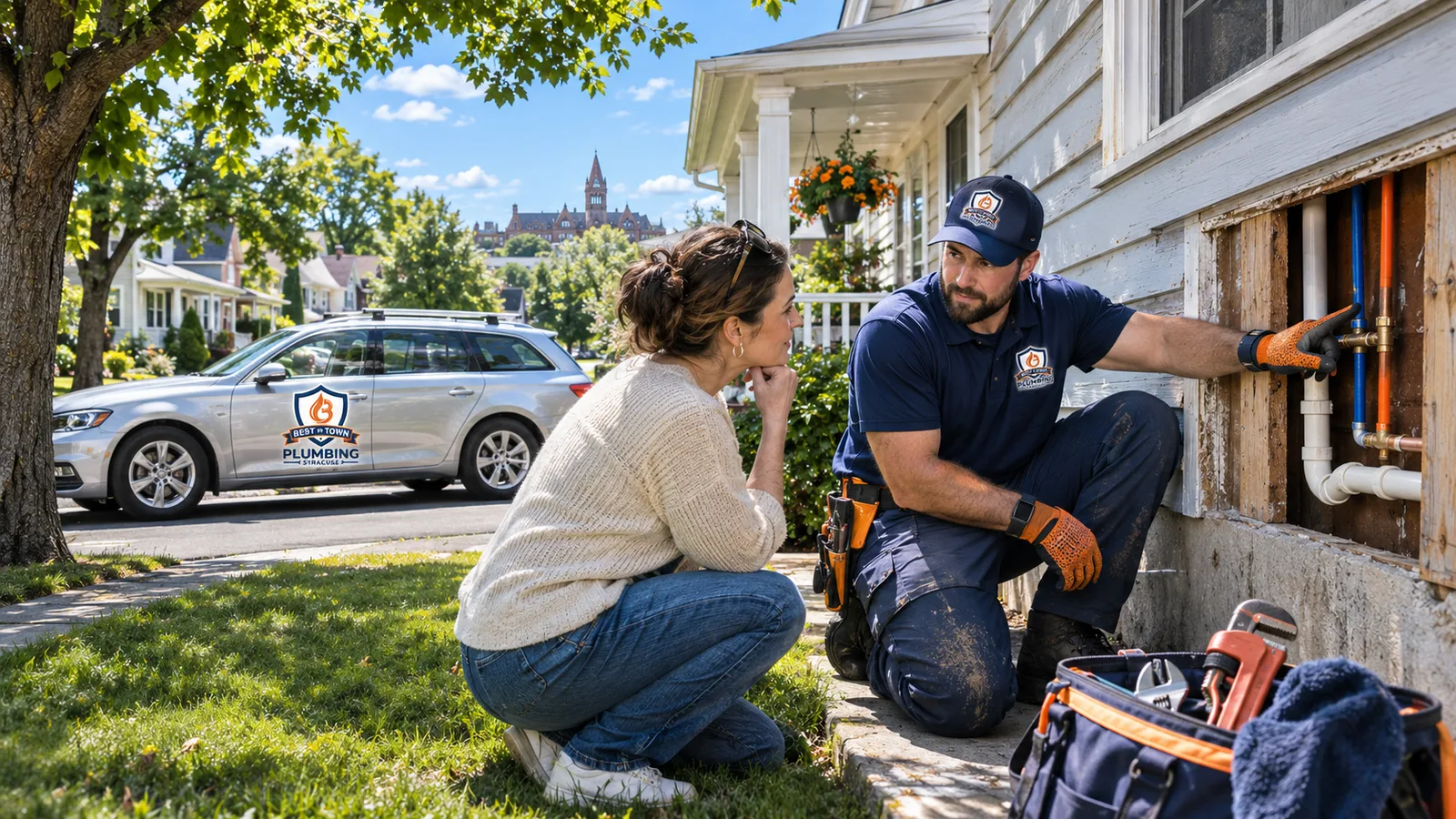
One call connects you directly with a local plumbing contractor who handles residential plumbing work in the Syracuse area.
Residential plumbing scope
A homeowner looking for a master plumber Syracuse NY can turn to may be dealing with a leaking fixture, a recurring drain problem, weak water pressure, damaged piping, or plans for new plumbing. The first practical step is determining whether the trouble is isolated to one fixture or points to a larger problem in the supply, drain, vent, or water-heating system.
A plumbing contractor may inspect shutoff valves, exposed pipe, fixture connections, trap assemblies, drainage flow, venting, and signs of concealed moisture. For a leak, that can mean separating a failed faucet cartridge or loose connection from corrosion inside a wall. For slow drainage, it means identifying whether the restriction is in a fixture branch or farther along the building drain. The right repair depends on that diagnosis.
Syracuse winters add a real concern. Water expands when it freezes, so vulnerable piping in exterior walls, crawl spaces, garages, and other poorly heated areas can split. Older houses may also contain a mix of galvanized steel, copper, cast iron, and newer plastic piping. A contractor needs to identify the existing material and condition before recommending a compatible repair.
Best In town Plumbing Syracuse makes the search simpler. We connect callers with local plumber companies serving Syracuse, NY that handle residential plumbing work. You speak with the contractor directly, discuss the affected system, receive any quote from that contractor, and decide whether to proceed.
Diagnosis, repair, and installation
A contractor can trace visible or suspected leaks around supply lines, valves, fixture connections, ceilings, walls, and floors. The inspection should identify the source before finishes are opened or pipe is replaced.
Recurring backups may call for cable cleaning, hydro jetting, or a camera inspection. A camera can reveal roots, displaced joints, corrosion, bellies, and other defects that ordinary drain cleaning cannot correct.
Faucets, toilets, sinks, tubs, showers, garbage disposals, and individual shutoff valves can be repaired or replaced when parts wear out, connections leak, or fixtures no longer operate correctly.
Repeated leaks, restricted galvanized pipe, corrosion, or an altered floor plan can lead to partial or full repiping. Common replacement materials include copper, PEX, PVC, and CPVC where appropriate for the application.
A contractor can check the heater, connections, valves, venting or electrical supply, temperature and pressure relief valve, and signs of tank corrosion before discussing repair or replacement.
Moving a sink, toilet, shower, laundry connection, or appliance may require changes to supply, drainage, and vent lines. The contractor should review access, fixture placement, and permit requirements before work begins.
Four direct steps
Step 1 of 4
Call when you need a local contractor for residential plumbing repair, replacement, diagnosis, or installation. Calls are answered around the clock.
Step 2 of 4
The ZIP code identifies the service area, and you are connected directly with a local plumbing contractor who serves it. There is no form or email wait.
Step 3 of 4
Discuss the plumbing concern directly with the contractor. The contractor can explain the next steps, arrange access if appropriate, and provide the quote.
Step 4 of 4
Ask about the proposed scope, materials, permits, cleanup, and any warranty terms. You decide whether the contractor and proposed work suit your home.
Skip the search through multiple plumbing listings. One call connects you directly with a local contractor who serves the Syracuse area and handles residential plumbing work.
CALL NOW: +1 315 640 3561Work and material details
Before approving plumbing work
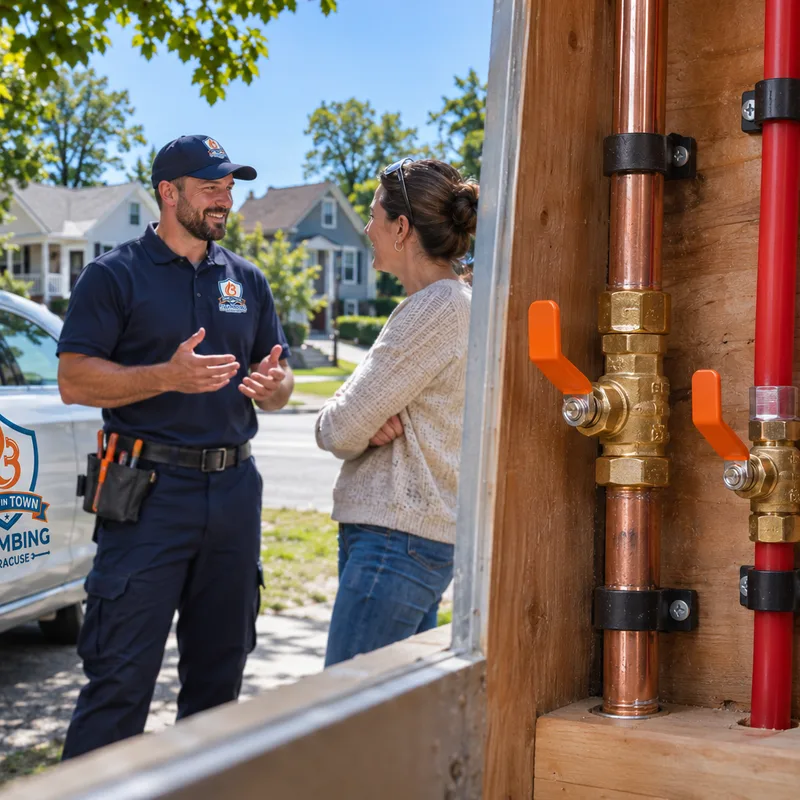
The decision depends on the pipe material, location, condition, and extent of the damage. One failed fitting may need a limited repair, while widespread corrosion, repeated pinhole leaks, or restricted galvanized piping may support replacing a longer section. Ask the contractor what was observed and why the proposed scope is appropriate.
The contractor should determine whether low pressure affects one fixture, one branch, or the whole house. Common checks include aerators, fixture cartridges, shutoff valves, pressure-reducing valves, supply piping, and evidence of a leak. Restricted older steel pipe can reduce flow even when incoming pressure is adequate.
A recurring clog does not automatically mean the sewer line is damaged. Grease, foreign material, roots, scale, a poor pipe slope, or a displaced joint can produce similar symptoms. A contractor may recommend a camera inspection when repeated cleaning does not settle the cause.
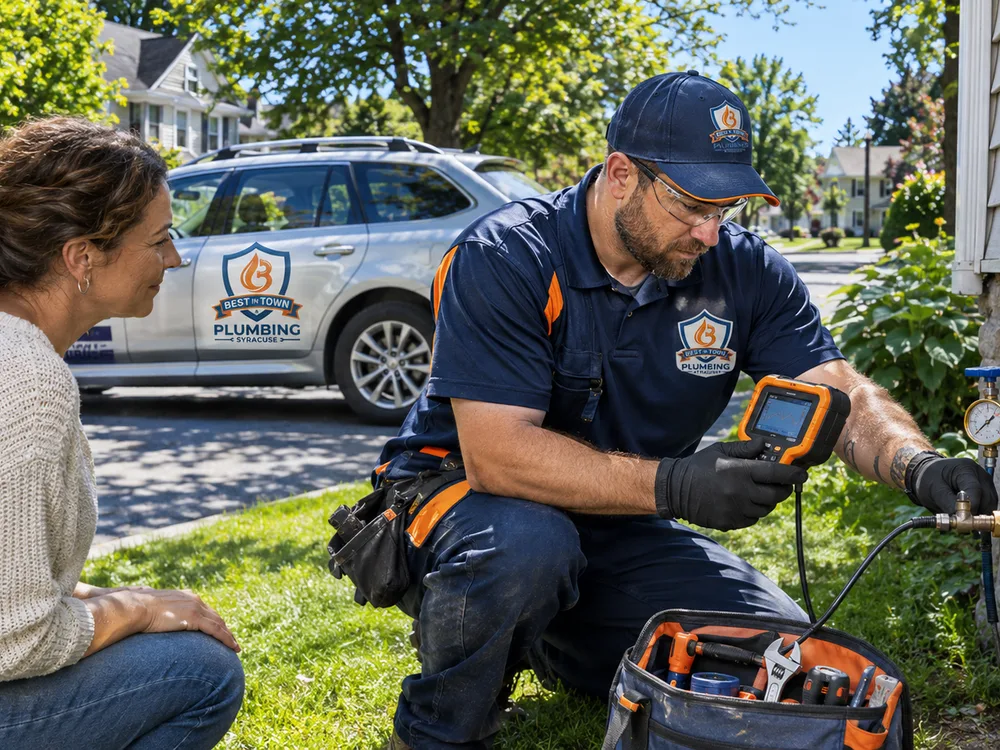
Leak detection starts by narrowing down which plumbing system and area are involved. The contractor may inspect fixtures and accessible pipe, isolate valves, check meter movement when applicable, use moisture readings, or apply acoustic and pressure-testing methods. Access openings should be discussed before walls, ceilings, or floors are disturbed.
Permit requirements depend on the scope and the authority with jurisdiction. Larger alterations, new fixtures, water-heater changes, sewer work, and substantial piping replacement may require permits or inspections, while limited repairs may be treated differently. Ask the contractor who will confirm the requirement and handle the permit if one applies.
Confirm the diagnosed problem, work area, materials, fixture models when relevant, access openings, restoration responsibilities, permit handling, cleanup, and warranty terms. For pipe replacement, ask whether the proposal covers a limited section, a branch line, or a broader repipe. The contractor supplies the quote, and you choose whether to proceed.
Vulnerable water lines need protection from freezing conditions. A contractor can identify piping in garages, crawl spaces, exterior walls, and unheated areas, then discuss insulation, air sealing, rerouting, or controlled heat where appropriate. If a pipe freezes, shut off the water if leakage appears and avoid open-flame thawing methods.
One call is the next step
Call and get connected directly with a contractor who serves the Syracuse area. Discuss the plumbing work with the contractor and decide what happens next.