Leaks and damaged pipes
A contractor can trace visible drips, concealed moisture, low-pressure complaints, and freeze-related splits. The inspection may include supply lines, shutoff valves, fixture connections, drain joints, and nearby finishes.
Serving Syracuse, New York & surrounding areas
Calls answered around the clock

Plumbing service in East Syracuse
One call connects you directly with a local plumbing contractor who serves your area.
Home plumbing diagnosis
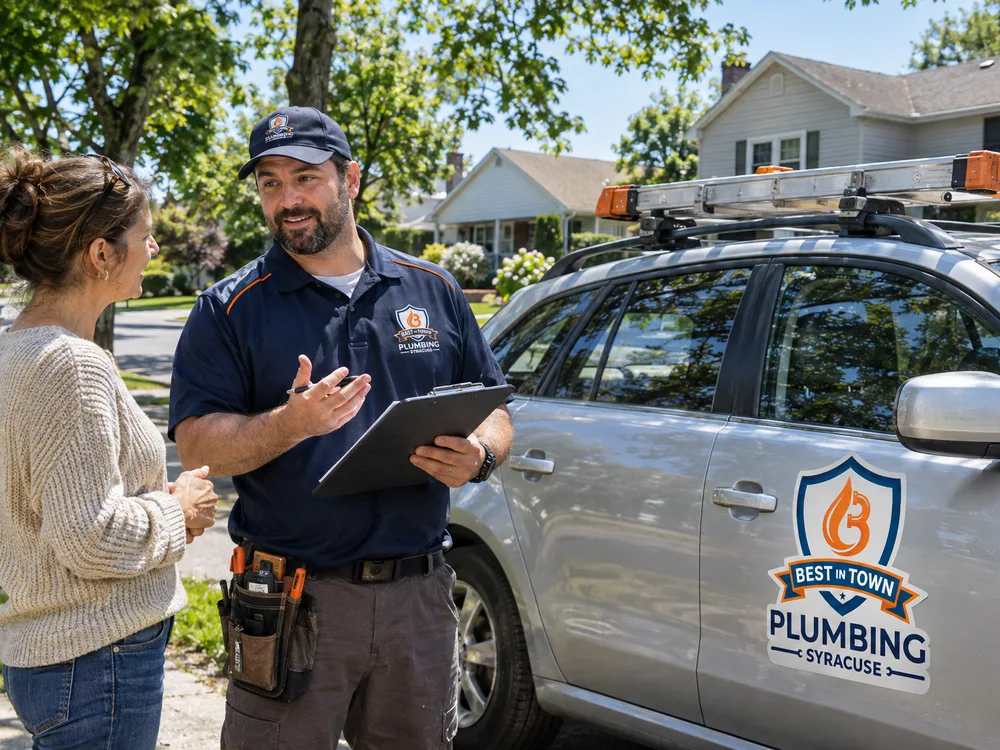
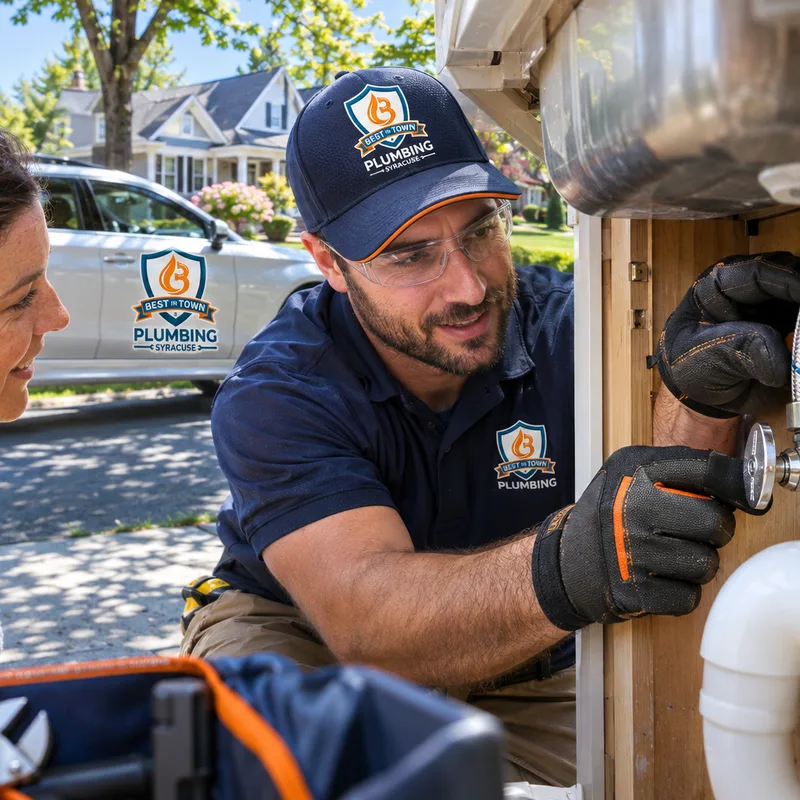
Leaks, clogged drains, running toilets, failing fixtures, damaged pipes, and water-heater trouble can disrupt several parts of a home. A plumber starts by identifying where the problem originates rather than treating the first visible symptom. Water beneath a sink may come from the faucet body, supply stop, trap, drain connection, or a pipe inside the cabinet. A recurring drain backup may point to a local fixture blockage or a restriction farther along the branch or building drain.
Best In town Plumbing Syracuse makes the search simpler. We connect callers with plumber contractors in Syracuse who serve East Syracuse and nearby communities. You speak with the contractor directly, ask about the work, receive the contractor's quote, and decide whether to proceed. There is no contact form or email wait.
Central New York winters make plumbing protection especially relevant. Supply piping in unheated crawlspaces, garages, exterior walls, and cabinets against outside walls can be vulnerable during sustained cold. Contractors may check pipe insulation, shutoff access, and the route of vulnerable lines when diagnosing freeze-related damage. In older homes, they may also encounter a mix of galvanized steel, copper, cast iron, and newer PEX or PVC repairs. Material, condition, accessibility, and local requirements all affect the appropriate repair.
Common plumbing needs
A contractor can trace visible drips, concealed moisture, low-pressure complaints, and freeze-related splits. The inspection may include supply lines, shutoff valves, fixture connections, drain joints, and nearby finishes.
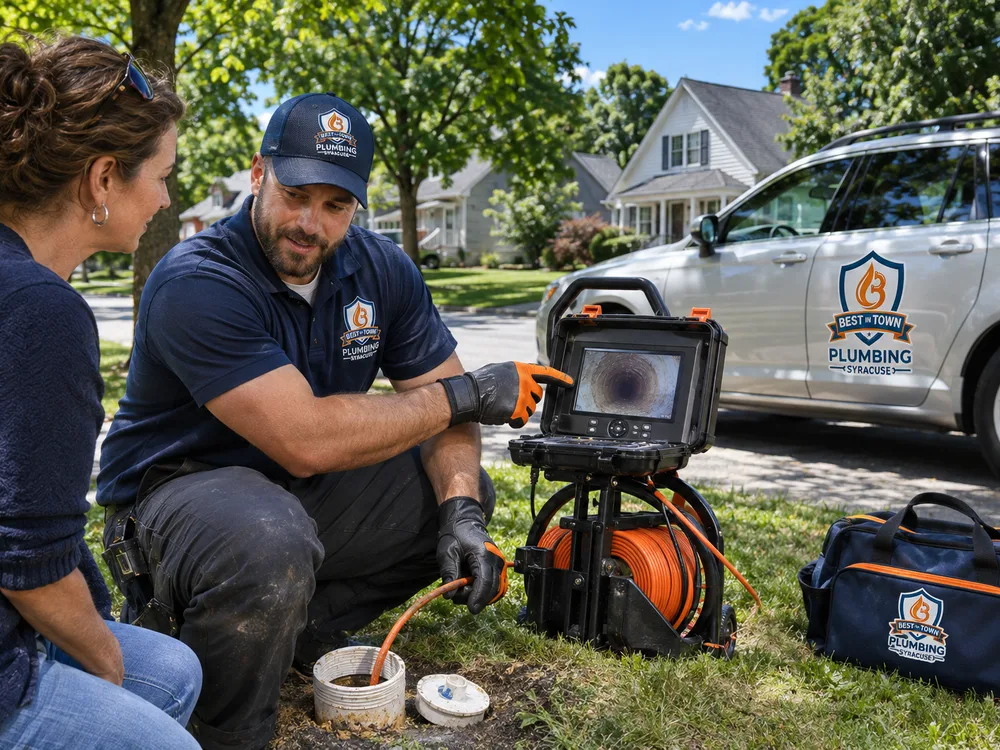
Slow sinks, repeated toilet backups, gurgling, and wastewater at a lower drain require diagnosis before cleaning or repair. Contractors may use mechanical cabling, hydro jetting, or a camera inspection when appropriate for the pipe and blockage.
Running toilets, loose fixtures, weak flushing, dripping faucets, and leaking supply connections may call for an internal repair or fixture replacement. The contractor checks mounting, seals, valves, drainage, and water pressure before recommending an option.
No hot water, temperature changes, unusual sounds, discolored water, and leakage can involve controls, heating components, venting, valves, the tank, or connected piping. Gas and electric units require different diagnostic steps.
Routine work can include replacing worn supply lines, exercising accessible shutoff valves, checking exposed joints, clearing developing drain restrictions, and reviewing piping in spaces exposed to winter temperatures.
Sink, dishwasher, refrigerator, washing-machine, and other water connections need secure supply and drainage arrangements. A contractor can check compatibility, valve condition, trap configuration, and accessible connections.
Four direct steps
Step 1 of 4
Call the number shown and enter your ZIP code. You are connected directly with a local plumber who serves that ZIP.
Step 2 of 4
Explain what you have observed directly to the contractor, including where water appears, which fixtures are affected, and whether the problem changes when a fixture runs. The contractor can discuss availability and the likely next diagnostic step.
Step 3 of 4
The contractor determines the source and scope before recommending work. This may involve checking pressure, testing fixtures, inspecting accessible piping, opening a cleanout, or using a drain camera when conditions call for it.
Step 4 of 4
The contractor explains the repair or replacement approach and provides the quote. Ask what is included, whether finishes must be opened, how water service will be affected, and what warranty terms apply. You decide whether to move forward.
Stop working through a list of plumbers. One call connects you with a local contractor who can discuss the plumbing problem directly with you.
CALL NOW: +1 315 640 3561Work and connection details
Before approving plumbing work
The decision depends on the location and extent of the damage, the pipe material, accessibility, and the condition of nearby piping. One failed fitting may support a focused repair, while repeated leaks or badly deteriorated pipe can justify replacing a longer run. The contractor should explain what was found and why the recommended scope is appropriate.
A recurring clog should be evaluated beyond the affected fixture. The contractor may check whether other drains are slow, where the branch joins the main drain, whether a cleanout is accessible, and whether the pipe has buildup, damage, poor slope, root intrusion, or another obstruction. Camera inspection may be useful after the line is open enough to inspect.
A leaking water heater does not always require replacement, because water can come from a valve, fitting, or connected pipe. Leakage from the tank body is a different condition and commonly points toward replacement. The contractor identifies the source and reviews the unit's type, condition, connections, venting when applicable, and installation space.
Ask the contractor to define the problem, proposed work, included materials, access needs, cleanup responsibility, and warranty terms. For work behind a wall or beneath a floor, ask who handles opening and restoring the finish. The quote comes directly from the contractor, and you decide whether to proceed.
Permit requirements depend on the property jurisdiction and the scope of work. East Syracuse is within the Town of DeWitt, but municipal requirements can vary by address and project type. Ask the contractor which authority applies, whether a permit or inspection is required, and who will coordinate it before work begins.
If it is safe and the correct valve is accessible, shut off water to the fixture or use the home's main shutoff for an uncontrolled supply leak. Keep clear of standing water near electrical equipment, and do not use a fixture that causes wastewater to back up. A drain leak may stop when the fixture is not used, while a pressurized supply leak generally continues until its water source is isolated.
One call is the next step
Call and get connected directly with a plumbing contractor who serves East Syracuse. Discuss the problem with the contractor, review the next step, and decide what works for your home.